




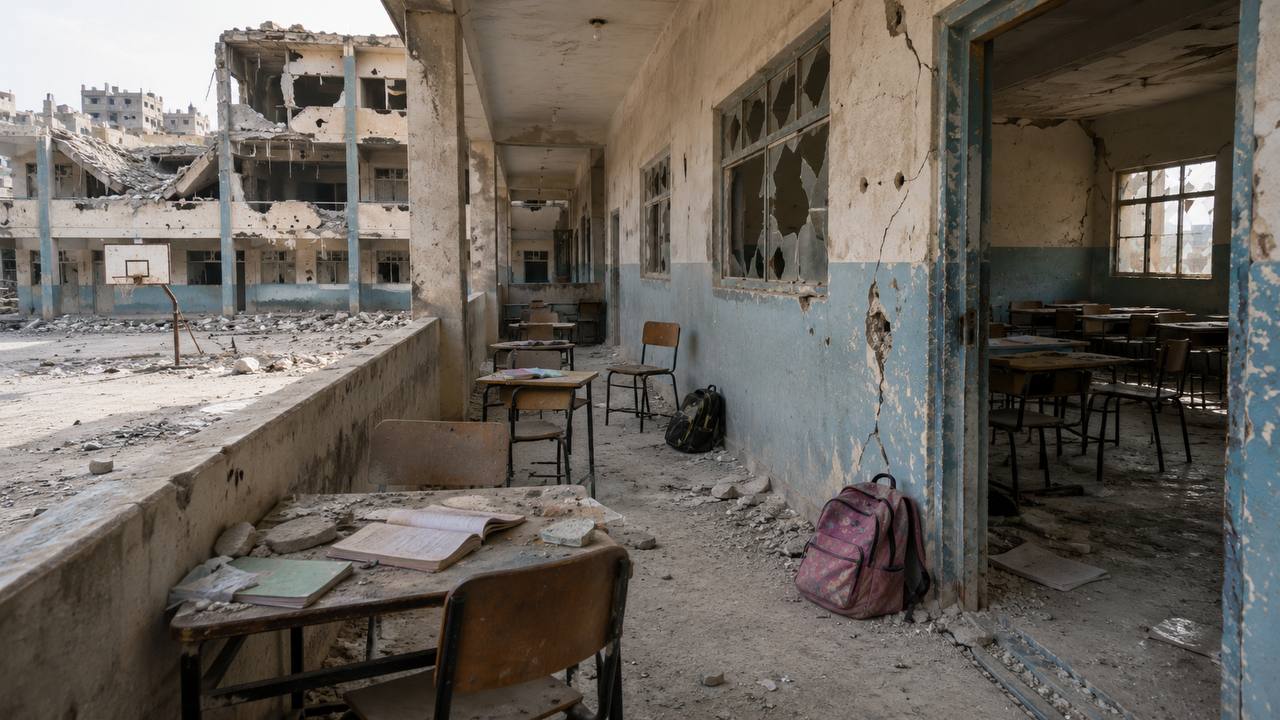

Children in Gaza face significant dangers, including aerial bombardment and sniper fire, as they attempt to attend school following the restart of the academic year in the region.
The resumption of educational instruction has forced students to navigate unsafe routes where military attacks and active gunfire pose continuous threats to their survival. Educational activities have resumed under conditions of severe instability, placing young learners at immediate risk during their daily commutes.
Background: The educational sector in the Gaza Strip has faced prolonged systemic challenges arising from decades of political instability, economic isolation, and repeated armed conflicts. Following the administrative shift in 2007, comprehensive land, air, and sea blockades were implemented, severely restricting access to basic construction materials, educational supplies, and international academic exchanges. Major military campaigns over preceding years, including significant operations in 2008, 2012, 2014, and 2021, caused extensive physical damage to educational facilities and forced repeated long-term closures of schools and universities. Primary and secondary education in the territory has traditionally relied on a combination of governmental schools and institutions managed by the United Nations Relief and Works Agency for Palestine Refugees.
Ensuring safe access to basic education remains a primary challenge for international relief agencies and local administrators monitoring child welfare during active hostilities.
Source: Al Jazeera