




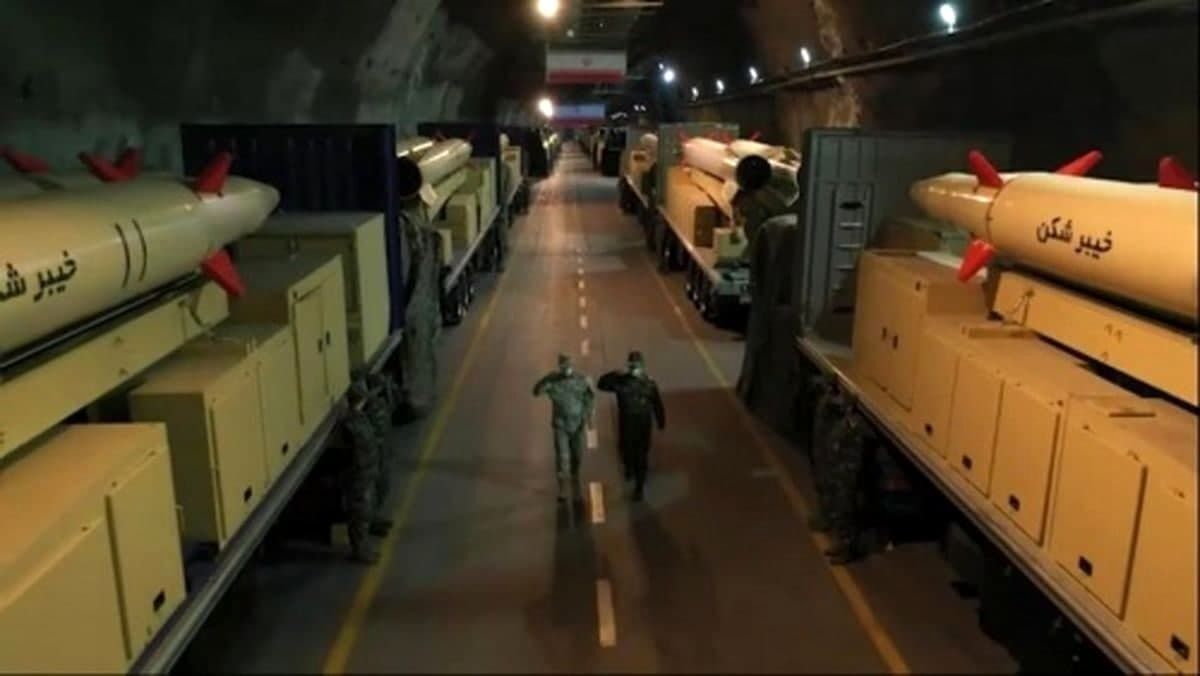

Over the past decade, Iran has steadily expanded a network of hardened underground facilities commonly referred to as “missile cities”. These sites—often embedded deep within mountains or beneath reinforced terrain—have become a central pillar of Tehran’s military strategy. Far from being symbolic, they represent a calculated response to airpower dominance, surveillance capabilities, and the realities of modern precision warfare.
What Are Iran’s “Missile Cities”?
The term “missile city” refers not to a single base but to a distributed system of underground complexes designed for the following:
- Storage of ballistic and cruise missiles
- Protection of mobile launchers
- Assembly and preparation of systems
- Command and control operations
These facilities are believed to be spread across multiple مناطق in Iran, with some built into mountainous terrain to maximise natural protection.
How They Function: A System, Not a Site
Iran’s underground missile infrastructure operates as a modular and networked system, rather than a single production facility. At a high level, the structure includes:
1. Dispersed Architecture
Instead of concentrating assets in one location, Iran distributes them across multiple underground sites. This reduces vulnerability and ensures continuity even if one location is compromised.
2. Hardened Construction
- Deep tunnels carved into rock or reinforced soil
- Blast-resistant doors and internal compartmentalisation
- Limited and concealed
This makes detection and destruction significantly more difficult.
3. Internal Mobility
Within these complexes:
- Underground roads and rails allow the movement of equipment
- Storage bays are connected to launch preparation areas
- Some systems are believed to support rapid-to-surface launch positions
4. Separation of Functions
Key activities are often separated:
- Storage in one section
- Assembly or preparation in another
- Launch support elsewhere
This modularity increases resilience.
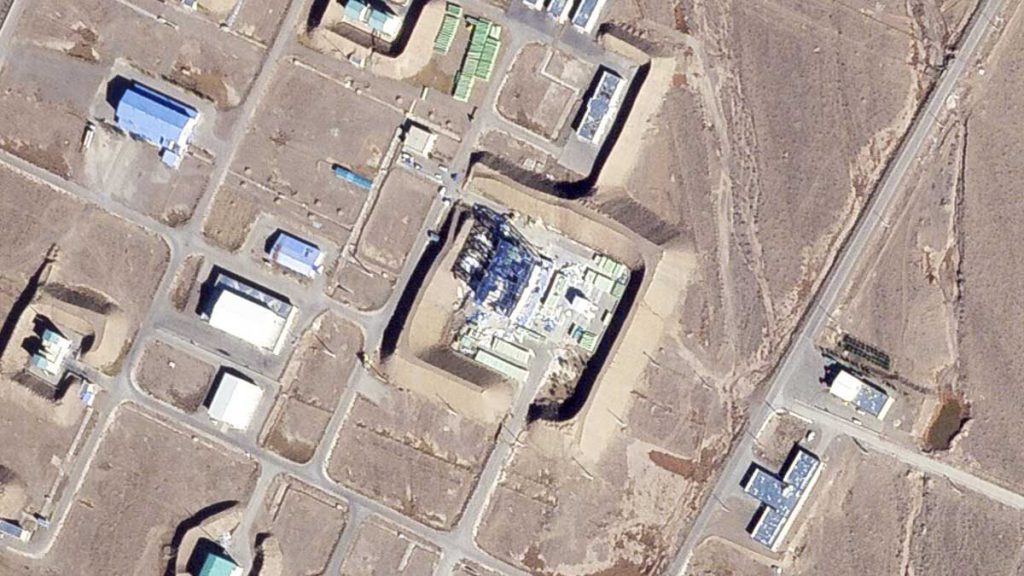
Why Underground? Strategic Logic
Iran’s investment in underground missile cities is driven by several strategic considerations:
Survivability
Underground facilities are designed to withstand:
- Airstrikes
- Precision-guided munitions
- Surveillance and targeting
Operational Continuity
Even under sustained attack, Iran can:
- Preserve parts of its arsenal
- Continue limited launch capability
- Reconstitute forces over time
Deterrence
The uncertainty created by hidden, hardened systems complicates adversary planning. Opponents cannot be certain how much capability remains after a strike.

Structural Complexity: Why They Are Hard to Neutralise
These systems present multiple layers of challenge:
1. Detection Limitations
- Buried facilities reduce visibility
- Entrances can be camouflaged or limited in number
2. Redundancy
- Multiple sites ensure that destruction is never complete
- Loss of one node does not collapse the network
3. Time and Intelligence Gaps
- Identifying, confirming, and tracking underground assets is resource-intensive
- Real-time targeting is difficult
How States Attempt to Counter Such Systems (High-Level)
Rather than relying on a single method, countries typically adopt a multi-layered approach:
Intelligence and Surveillance
Continuous monitoring using satellites and other sensors to track activity patterns and detect changes.
Missile Defense
Intercepting missiles after launch remains a key line of defence, especially when underground systems cannot be fully neutralised.
Economic and Technological Pressure
Sanctions and export controls aim to:
- Limit access to critical components
- Slow production and replenishment
Strategic and Diplomatic Measures
Negotiations, international pressure, and monitoring mechanisms are used to constrain capabilities over time.
Implications for Modern Warfare
Iran’s missile cities highlight a broader shift in military strategy:
- From visibility to concealment
- From centralised bases to distributed networks
- From vulnerability to survivability
They reflect an understanding that in an era of advanced airpower, what survives matters more than what is visible.
Iran’s underground missile cities are not merely military installations; they are part of a broader strategic doctrine—one built on survivability, ambiguity, and deterrence. Their existence complicates military planning, reduces the effectiveness of conventional strikes, and reinforces a central reality of modern conflict: deeply buried and distributed systems are among the most difficult military capabilities to eliminate.
For analysts and policymakers alike, the lesson is clear: future conflicts will not only be fought in the open but also deep beneath the surface.