





How Iran tried to confront Trump’s coercive unpredictability with a strategy of its own and why survival is not the same as success
In the recent war involving Iran, Israel, and the United States, Donald Trump’s approach appeared to follow the logic of the “madman theory”: the use of unpredictability, escalation, and psychological pressure to force an adversary into concession. But Iran did not respond as a passive target of coercion. Instead, it appears to have answered with its own version of strategic unpredictability — widening the conflict, raising the regional cost of war, and signaling that pressure on Tehran would destabilize the entire Middle East rather than produce regime change. The result was not a simple victory for either side, but a dangerous contest of reciprocal brinkmanship. Iran may have prevented collapse and denied its enemies a clean political outcome. Yet that does not mean it won.
There are moments in international politics when military confrontation cannot be understood only through the language of force. Troop movements, missile exchanges, and battlefield outcomes matter, but they do not fully explain what states are trying to do. At a deeper level, some wars are contests over psychology: over who can frighten whom, who can shape the calculations of third parties, and who can make the future appear so dangerous that negotiation becomes preferable to escalation.
The latest confrontation involving Iran, Israel, and the United States fits this pattern. To read it simply as a conventional military clash is to miss its central political logic. This was also a struggle over uncertainty, resolve, and the manipulation of perceived irrationality. Donald Trump’s conduct appeared to embody what international relations scholars have long called the madman theory: the deliberate attempt to convince adversaries that one may be willing to go further than expected, act outside conventional limits, and impose destruction in ways that make resistance appear too risky. The purpose of such a posture is not random recklessness. It is coercion through fear.
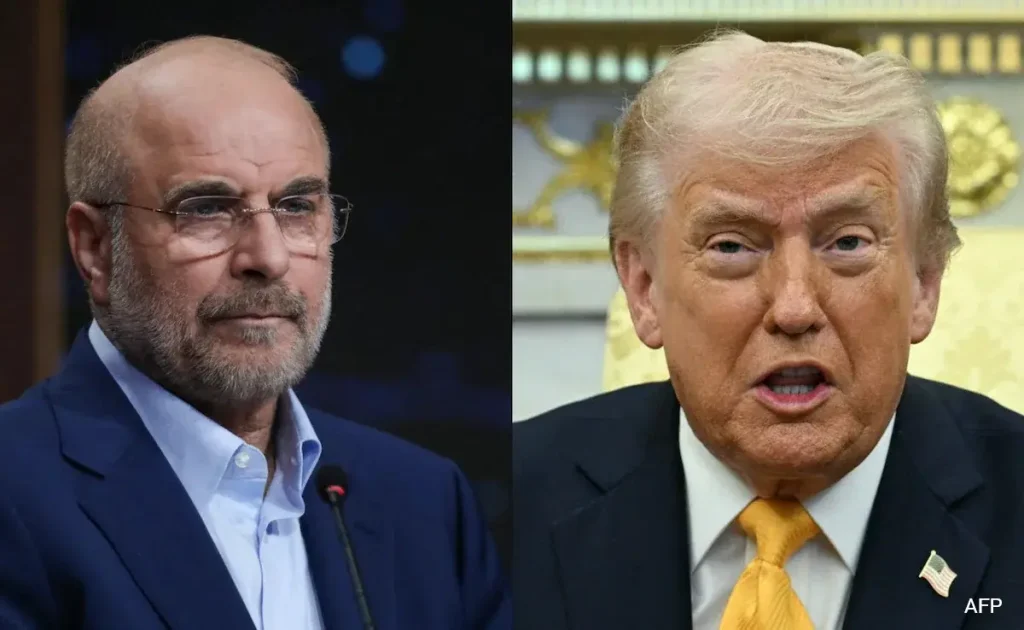
But Tehran did not react in the way such a strategy presumes. It did not simply retreat, capitulate, or fracture under pressure. Instead, Iran appears to have responded by constructing a counter-logic of its own. Rather than accepting the role of the intimidated adversary, it sought to demonstrate that it, too, could turn unpredictability into leverage. By expanding the theatre of confrontation, threatening the stability of neighboring states, and signaling that war with Iran would spill far beyond Iran itself, Tehran attempted to neutralize Trump’s coercive advantage. This is why the conflict may best be understood as madman versus madman: not because either side was literally irrational, but because both sought power through the political performance of dangerous escalation.
The question is whether Iran’s strategy worked.
That depends, above all, on what one means by success.
The return of the madman theory
The madman theory occupies an uneasy place in the study of international politics. Its basic premise is simple enough: a leader may gain bargaining power if opponents believe he is volatile, impulsive, and perhaps willing to do what others would consider too costly or too reckless. In such a setting, the threat of escalation can become more credible precisely because it appears to be less constrained by normal prudence. The adversary, uncertain about where the line really is, may choose concession over risk.
The theory has often been associated with Richard Nixon, but its logic extends beyond any one historical figure. It reflects a broader strategic intuition: that carefully cultivated unpredictability can function as a weapon. One need not actually be irrational; one merely needs others to worry that one may behave as if one were.
Trump’s foreign-policy style has repeatedly invited this interpretation. Maximalist rhetoric, sudden reversals, public ambiguity over thresholds, and a persistent effort to merge negotiation with threat have all been part of his political method. In dealing with Iran, this style suggests a form of coercive signaling built on asymmetry. If Tehran can be made to believe that Washington, under Trump, may go further and faster than any conventional administration, then the psychological burden shifts. The issue is no longer only American capabilities, but the fear of American unpredictability.
This is the deeper ambition of the madman posture: to compel without always having to conquer, to force retreat without necessarily having to fully occupy the battlefield. Yet that logic contains a profound vulnerability. It works best when it is one-sided. It assumes that the other side will remain more conventionally rational, more cautious, and more easily intimidated.
That was never a safe assumption in the case of Iran.
Iran’s answer: strategic disorder as counter-coercion
Iran’s confrontation with U.S. and Israeli pressure suggests something more than straightforward deterrence. Tehran appears to have pursued a strategy aimed not simply at retaliation, but at collapsing the very premise of limited coercion. Its message was blunt: there would be no neat war against Iran, no bounded campaign whose costs could be contained, no path from bombardment to regime change that bypassed wider regional consequences.
This matters because Iran cannot compete symmetrically with the United States and Israel in conventional military terms. It therefore has strong incentives to redefine the strategic space of conflict. When a weaker actor cannot dominate the battlefield, it can still try to dominate the political meaning of escalation. It can widen the conflict, internationalize the consequences, and transform local military pressure into a regional economic and diplomatic crisis.
That appears to have been the logic of Iran’s response. Rather than limiting itself to symbolic reprisals, Tehran sought to make the surrounding region feel the cost of war. This was not only about punishing enemies. It was about sending a signal to neighboring capitals, global markets, and external powers: a campaign against Iran would not remain an Iran problem. It would become a Middle East problem, an energy problem, and an international stability problem.
This is what makes the phrase counter-madman strategy analytically useful. Iran seems to have met Trump’s cultivated unpredictability with a version of strategic unpredictability of its own. If Trump’s coercive style depended on frightening Iran with the possibility of uncontrolled American escalation, Tehran’s response was to frighten Washington and its partners with the possibility of uncontrolled regional escalation. If Trump tried to turn uncertainty into leverage, Iran tried to demonstrate that uncertainty was not America’s monopoly.
This was a high-risk strategy, but not an incoherent one. It rested on four interrelated calculations.
First, Iran sought to deny the possibility of a limited war. It aimed to convince its adversaries that pressure on Tehran could not remain geographically or politically contained.
Second, it tried to turn structural weakness into leverage. Though militarily inferior in conventional terms, Iran still possesses the means to affect spaces that matter far beyond its own borders.
Third, it sought to influence third parties. The target audience was not only the White House or the Israeli cabinet, but also Arab states, external mediators, and international economic actors who might pressure for de-escalation if the regional costs rose sharply.
Fourth, Tehran appears to have calculated that external war would harden rather than shatter the regime. Far from producing immediate political collapse, outside attack could strengthen the security state, justify repression, and reinforce the regime’s claim that the country faced an existential assault.
In short, Iran’s strategy was not designed to win the war conventionally. It was designed to make victory politically unavailable to its enemies.
When both sides weaponize uncertainty
The idea of madman versus madman captures the most dangerous feature of this confrontation: once both actors attempt to gain leverage through the fear of uncontrolled escalation, the crisis ceases to be a simple coercive encounter and becomes a reciprocal risk contest.
This changes the character of diplomacy itself.
In a conventional crisis, negotiation and coercion are often treated as distinct phases or instruments. A state threatens; then it talks. It escalates; then it bargains. In a reciprocal brinkmanship environment, however, these distinctions begin to erode. Threats become part of dialogue, and dialogue becomes one more field of coercive performance. Each side speaks as if it is open to de-escalation while simultaneously trying to improve its position through further pressure. Negotiation does not replace coercion; it is conducted through it.
This also makes signaling far less stable. If each actor seeks to demonstrate superior resolve through dramatic rhetoric or sharp escalation, then the boundary between bluff and commitment becomes harder to read. Third parties struggle to know whether they are witnessing deliberate theater, serious preparation, or the beginning of uncontrolled escalation. The result is a strategic environment in which miscalculation becomes more likely precisely because everyone is trying to manipulate the expectations of everyone else.
Iran’s response must be understood in that light. It did not simply resist Trump’s pressure. It entered the same escalatory grammar. It sought to demonstrate that it, too, was prepared to make the crisis broader, costlier, and less predictable. The confrontation therefore became less a story of unilateral intimidation than of mutual danger production.
That shift has major implications. It means that the success of the original madman theory becomes much less certain. Once the target adopts a similar posture, the coercive advantage begins to dissolve. Fear ceases to flow in one direction. Instead, both sides begin trying to convince the other that they are less constrained, more resilient, and more willing to absorb chaos.
At that point, decisive victory becomes more elusive. The conflict moves toward stalemate, negotiated ambiguity, or mutual exhaustion rather than straightforward submission by the weaker actor.
Why the regime did not change
One of the implicit assumptions behind intense external pressure on Iran has long been that sufficient military and economic strain might trigger internal political transformation. This assumption remains widespread in policy discourse, but it rests on a shallow reading of how regimes under siege actually behave.
External attack does not automatically translate into regime collapse. In some cases, it produces the opposite effect.
The first reason is institutional. War tends to strengthen the security core of the state. Emergency conditions empower military and intelligence structures, centralize decision-making, and narrow the political space in which dissent can operate.
The second reason is social. Even populations with profound grievances against their rulers do not necessarily align with foreign military pressure. National vulnerability can coexist with domestic discontent. A society may resent its regime while still refusing to embrace a war that threatens state fragmentation or foreign domination.
The third reason is political. Regime change requires more than pressure. It requires elite fractures, organized alternatives, and a credible pathway from the collapse of the old order to the formation of a new one. Absent those conditions, even severe external damage may not produce transformation.
Iran’s counter-madman strategy appears to have taken these realities seriously. By framing the confrontation as one in which external enemies sought to break the country, Tehran likely strengthened the internal logic of regime preservation. It turned outside pressure into a justification for further control. In doing so, it helped ensure that war would consolidate the state’s coercive instincts rather than dissolve them.
This does not mean the regime became stronger in any absolute sense. It does mean that the expectation of rapid change was probably misplaced. Pressure can destroy infrastructure. It can deepen insecurity. It can intensify public suffering. But it does not necessarily generate political replacement.
That distinction is crucial. Many states survive wars that weaken them. Survival alone does not prove strategic health.
Success, but at what level?
Whether Iran succeeded depends entirely on the analytical scale at which the question is asked.
At the tactical level, the answer appears to be yes. The regime did not collapse. Tehran did not capitulate. The war did not end in rapid political transformation imposed from outside. If the immediate goal was to deny the United States and Israel a clean, coercive victory, Iran can plausibly claim to have achieved that.
This is no minor outcome. The whole point of coercive unpredictability is to frighten an adversary into concession before one has to pay the full price of war. If Iran absorbed the pressure, remained intact, and helped force the crisis back toward negotiation, then Trump’s strategy did not yield decisive political results.
At the operational level, the picture is more mixed. Iran clearly demonstrated that it could raise the cost of conflict and make escalation regionally consequential. It showed that it retained enough capability to transform a war against Iran into a wider crisis. That is significant, because it disrupted any illusion that overwhelming conventional superiority would automatically produce an orderly political outcome.
Yet the operational level is also where the limits begin to appear. A state can generate instability without being able to control its longer-term consequences. Escalating outward may create short-term leverage, but it may also alarm actors whose neutrality or ambiguity might otherwise have served one’s interests. Fear is a blunt instrument. It rarely remains confined to its intended audience.
At the strategic level, the answer becomes far more ambiguous. Did Iran emerge safer? More legitimate? Better positioned in the regional balance? Here the evidence points toward caution rather than confidence. A strategy that imposes pain on neighboring states may pressure them in the short term, but it can also deepen their willingness to align against Iran in the longer term. A state that survives war through heightened securitization may preserve power while worsening its legitimacy problem. A regime that avoids collapse may still emerge more isolated, more brittle, and more economically constrained.
This is the central distinction: Iran may have succeeded as a state under siege without yet succeeding as a state seeking strategic advantage.
At the diplomatic level, Iran’s achievement appears to be one of denial rather than settlement. It seems to have blocked the most extreme coercive objective — forced political transformation under war pressure — and helped push the confrontation back toward negotiation. But a return to talks does not automatically signal favorable terms. Often it simply reflects mutual recognition that the costs of continued escalation are too high. To re-enter diplomacy after war is not necessarily to negotiate from strength. It may instead mean that no actor found a decisive path forward.
Iran, then, may have compelled a return to bargaining without securing a clearly improved bargaining environment.
The paradox of surviving by escalation
The strongest case for Iran’s relative success is straightforward: the regime survived, the state endured, and the effort to translate military superiority into political collapse appears to have failed. For any government facing overwhelming external pressure, this is an achievement of undeniable importance.
But there is also a deeper paradox here.
A strategy of reciprocal unpredictability may work precisely by making the conflict too costly and too dangerous for the other side to finish decisively. Yet that same strategy can produce long-term effects that weaken the state using it. It can intensify regional fear, accelerate balancing coalitions, justify further sanctions or security measures, and deepen domestic militarization. In such cases, the state avoids defeat in the narrow sense while still entering a harsher strategic environment.
That may be the most accurate way to think about Iran’s position. Tehran seems to have prevented the war from becoming a clean mechanism of regime change. It denied its enemies the political result they may have sought. But denial is not the same as consolidation. Blocking the other side’s success does not automatically create one’s own.
The distinction between survival and victory is especially important in Middle Eastern geopolitics, where states often confuse endurance with resolution. To remain standing after a major confrontation can be rhetorically framed as triumph. Sometimes, politically, that framing matters. But analytically it is insufficient. A serious assessment has to ask not only whether the state remained intact, but what strategic position it now occupies.
Iran may have preserved regime continuity, but continuity alone does not answer whether it is now more secure, less isolated, or better able to shape the region on favorable terms. In fact, it may suggest the reverse: that Tehran survived only by accepting a deeper cycle of insecurity.
The limits of Trump’s coercive logic
If Iran’s response reveals anything, it is that Trump’s apparent reliance on the madman theory faced serious structural limits in this case. The theory assumes that the adversary is more vulnerable to uncertainty than the coercer is. But this assumption breaks down when the target state is deeply conditioned by siege, ideologically invested in resistance, and capable of imposing wider regional costs.
Iran is not a conventional status quo power seeking merely to minimise disruption. It is a regime whose identity has long been tied to endurance under pressure and whose strategic toolkit includes methods of indirect escalation. That does not make Tehran invulnerable. It does mean, however, that coercive spectacle may not translate easily into political submission.
Indeed, once Iran responded with its own form of dangerous signalling, the asymmetry Trump relied upon began to erode. The coercive encounter stopped being one in which a powerful and unpredictable actor intimidated a weaker and more cautious one. It became a contest between two actors, each trying to make the future look more frightening than the present.
That is the point at which the madman theory begins to lose its distinctive power. It ceases to be a unilateral advantage and becomes a shared trap.
successful as denial, not yet as settlement
The most convincing interpretation of this confrontation is that Iran met Trump’s coercive unpredictability with a reciprocal strategy of its own. Tehran appears to have concluded that it could not defeat the United States and Israel conventionally, but it might still deny them a meaningful political victory by widening the war, raising regional costs, and proving that pressure on Iran would destabilise the broader Middle East rather than produce regime change.
In that sense, the formula of madman versus madman is not merely rhetorical. It captures a real strategic dynamic. Both sides tried to transform uncertainty into leverage. Both sought to weaponize the fear of uncontrolled escalation. Both tried to force the other and the region around them into calculations shaped not only by power, but by risk.
Did Iran succeed? In the narrow but crucial sense, yes. It appears to have prevented a rapid collapse of the regime, denied its enemies a clean political outcome, and helped shift the confrontation back toward negotiation.
But that success has limits. Iran may have survived without securing a favorable strategic settlement. It may have blocked defeat without producing real consolidation. It may have demonstrated resilience while also deepening the very conditions of insecurity, isolation, and regional distrust that make future crises more likely.
The most accurate conclusion, therefore, is neither triumphalist nor dismissive. Iran’s strategy seems to have worked as an instrument of denial. It did not yet work as an instrument of resolution. It prevented one outcome without clearly achieving another.
That is why survival should not be mistaken for victory. And that is why the real lesson of this war is not that either side mastered coercion, but that once both sides embraced the politics of dangerous unpredictability, the result was not decisive domination. It was unstable bargaining after mutual escalation a reminder that in the Middle East, as elsewhere, the logic of the madman is most hazardous when it ceases to belong to only one man.