




Dubai’s rise has always depended on a simple but powerful promise: stability in an unstable region. In 2026, that promise is under pressure. Iranian attacks on Gulf infrastructure, shipping routes, and regional assets have forced a fundamental reassessment of risk across the Middle East. For Dubai, the question is no longer whether it can grow, but whether it can preserve the conditions that made its growth possible.
This is not a city built on oil dependency or ideological positioning. Dubai is built on movement – of capital, people, goods, and trust. When war touches the Gulf, it is not just a security problem. It becomes an economic test of the entire model.
Yet Dubai is not entering this crisis from a position of weakness. Its financial system remains liquid
1. Immediate Impact: Shock Without Collapse
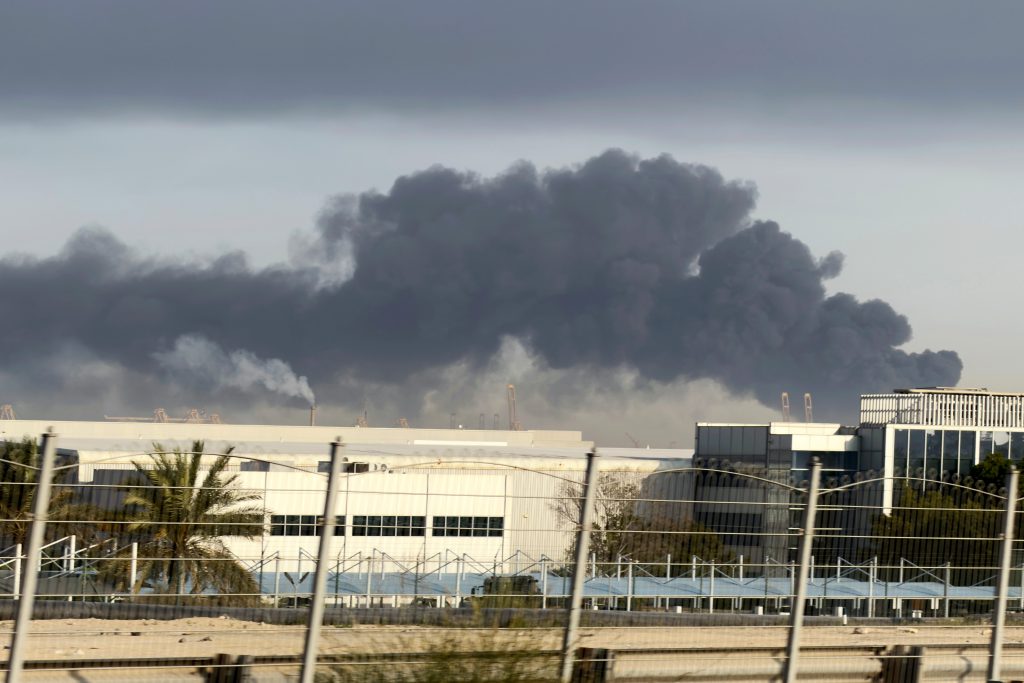
The first effect of the Iran-related escalation is disruption, not destruction. Dubai is not a frontline battlefield, but it sits within a region whose arteries are suddenly fragile. The Strait of Hormuz — critical to global energy and trade flows — has become a zone of uncertainty. Even partial disruption creates ripple effects across shipping, aviation, insurance, and investor sentiment.
For Dubai, this translates into friction. Flights may reroute. Insurance premiums rise. Shipping schedules become less predictable. Corporate risk calculations shift. None of these factors alone is catastrophic, but together they increase the cost of doing business in a city whose success depends on efficiency.
Yet Dubai is not entering this crisis from a position of weakness. Its financial system remains liquid, its infrastructure intact, and its economy diversified. Tourism, logistics, and financial services continue to function, even under pressure. The immediate picture is therefore one of resilience under strain — a system bending, not breaking.
2. The Strategic Paradox: Crisis as Opportunity
Paradoxically, the same instability that threatens Dubai also reinforces its importance.
In times of regional conflict, capital rarely exists entirely. Instead, it relocates within the region — toward the most stable, internationally integrated, and administratively reliable hubs. Dubai remains one of the few cities in the Middle East capable of absorbing that shift.
This creates a dual dynamic. On one hand, sectors like tourism and aviation face volatility. On the other hand, wealth management, private capital inflows, and corporate relocation may accelerate. For investors and businesses operating in or near conflict zones, Dubai offers something increasingly rare: a functioning ecosystem with global connectivity and legal clarity.
In this sense, Dubai is not just exposed to the crisis — it is also positioned to mediate it.
3. The UAE’s Strategic Thinking: Containment Over Escalation
The United Arab Emirates is approaching the conflict with calculated caution. Its strategy appears to rest on three pillars: deterrence, de-escalation, and continuity of trade.
The UAE has strong incentives to avoid full-scale war. Its economic model depends on openness — open skies, open ports, and open financial systems. A prolonged conflict with Iran would threaten all three. At the same time, the UAE cannot afford to appear vulnerable. It must signal the capability and willingness to respond to direct threats.
This balancing act defines Abu Dhabi’s posture in 2026. It is neither passive nor aggressively expansionist. Instead, it is pragmatic: protect infrastructure, maintain investor confidence, and push diplomatically for the restoration of maritime security.
For Dubai, this approach is critical. The city’s future depends less on military outcomes and more on whether the UAE can prevent regional instability from becoming permanent.
4. Two Possible Futures for Dubai in 2026
Dubai’s trajectory in 2026 will likely depend on the duration and intensity of the conflict.
In a limited-conflict scenario, where disruptions remain episodic, Dubai adapts. Costs increase, but the system holds. The city becomes more security-conscious and more risk-aware, but also more central to regional economic activity. Businesses consolidate operations in Dubai rather than dispersing them. Capital seeks safety within reach of instability — not far from it.
In a prolonged-conflict scenario, the risks deepen. Persistent disruption to shipping routes, sustained insurance pressure, and repeated security incidents begin to erode confidence. Dubai would still function, but its growth would slow. Its model becomes more expensive to sustain, and its competitive advantage — seamless connectivity — becomes harder to guarantee.
The difference between these two futures is not dramatic collapse versus stability. It is efficiency versus friction, acceleration versus deceleration.
5. Structural Strengths: Why Dubai Is Likely to Endure
Despite the risks, Dubai retains structural advantages that are difficult to replicate.
It has world-class infrastructure, from ports to airports to digital systems. It has a business-friendly regulatory environment. It has deep integration with global finance and trade networks. Most importantly, it has experience managing volatility.
Dubai has navigated financial crises, regional conflicts, oil shocks, and global pandemics. Each time, it has adapted rather than retreated. The current crisis, while serious, fits into that pattern.
What may change is not Dubai’s existence as a hub, but the nature of that hub. It may become less about effortless growth and more about managed resilience – a city designed not just for expansion, but for endurance.
A Harder, More Essential Dubai
The Iranian attacks have altered the strategic environment around Dubai, but they have not eliminated its relevance. If anything, they have clarified it.
Dubai’s future in 2026 is unlikely to be defined by decline. It is more likely to be defined by transformation. The city will face higher costs, greater scrutiny, and more complex risks. But it will also become more essential – as a node of stability in a region where stability is increasingly scarce.
The real question is not whether Dubai will survive this moment. It almost certainly will. The question is what kind of city it becomes afterwards: a softer version of its past or a harder, more strategically indispensable version of itself.
The early signs suggest the latter.