



In the aftermath of war, coercion, and diplomatic deadlock, Iran appears to be moving toward a different strategic horizon: not surrender under pressure, and not full reconciliation with the West, but a controlled effort to reshape the terms of engagement. What is now emerging is not the outcome Donald Trump long sought from Iran — a settlement born of maximum pressure and strategic humiliation but the outline of a narrower, more transactional order in which Tehran preserves room to maneuver.
According to three Iranian officials who spoke to NEMO, the Islamic Republic is increasingly focused on a new trade-based policy track with Iran at the center of regional and financial recalculation. The message is not that Tehran is abandoning confrontation altogether. Rather, it is seeking to convert battlefield survival and economic endurance into leverage at the negotiating table. In this vision, the future is not defined by capitulation, but by adaptation.
From Military Pressure to Economic Repositioning
Trump’s Iran policy was built on a simple premise: sustained military and economic pressure would eventually force Tehran into accepting Washington’s preferred end state. That end state was never merely nuclear restraint. It implied strategic rollback, regional containment, and a redefinition of Iran’s political behavior under duress.
But the Iranian response has followed a different logic. Rather than moving directly from pressure to submission, Tehran has sought to show that it can absorb shocks, escalate unpredictably, and still return to diplomacy without appearing defeated. This has allowed Iran to challenge a central assumption of coercive statecraft: that pain necessarily produces compliance.
What now seems to be taking shape is a strategy of economic repositioning. Iran is signaling that any future arrangement must leave space for trade, revenue generation, and financial movement. It may accept constraints, but not paralysis. It may enter talks, but not on the basis of political surrender.
The Strait of Hormuz as Leverage, Not Just Geography
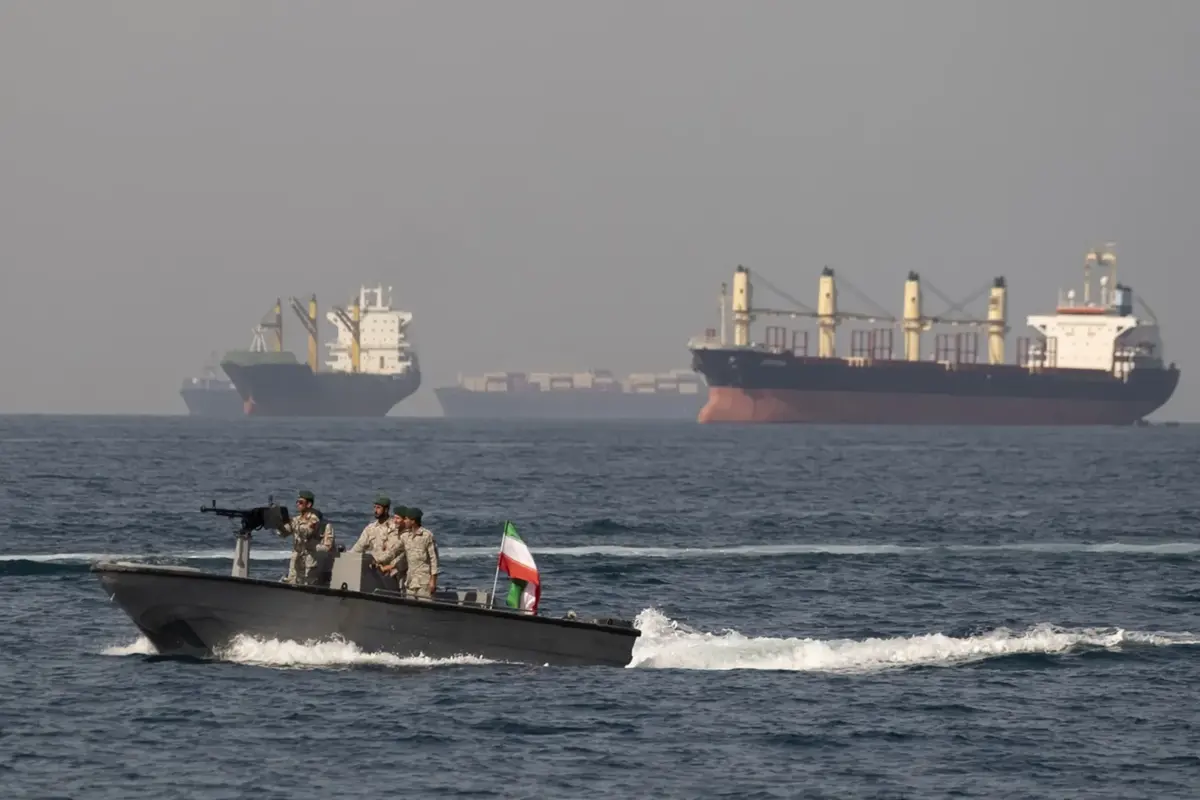
The Strait of Hormuz is not merely a waterway in this story. It is a strategic instrument. For Iran, it remains one of the few geographic assets capable of shaping global economic attention in real time. Whenever tensions rise around the strait, the issue immediately becomes larger than Iran itself: energy security, shipping routes, insurance costs, and regional stability all come into play.
That is precisely why Hormuz matters not only militarily but politically. Tehran understands that control, disruption, or even the credible threat of instability in the strait can force other actors to think beyond the language of punishment. It internationalizes Iran’s relevance. It reminds rivals and negotiating partners alike that the Islamic Republic cannot simply be sanctioned into irrelevance.
In that sense, the Strait of Hormuz has become part of Iran’s broader bargaining architecture. It allows Tehran to link its own isolation to wider systemic costs. This does not guarantee victory, but it does complicate efforts to impose a one-sided settlement.

A Shift Toward Parallel Financial Channels
The most significant feature of Iran’s evolving posture may be its growing interest in alternative financial mechanisms. Faced with sanctions, banking restrictions, and exclusion from formal Western systems, Tehran appears increasingly interested in channels that sit outside conventional economic control.
This is where digital finance enters the picture. The three Iranian officials who spoke to NEMO suggested that Iran’s strategic thinking is now increasingly tied to cryptocurrency and other high-risk financial tools. Whether this reflects an official state project, internal experimentation, or aspirational signaling remains unclear. But the political meaning is already important: Iran is looking for new rails of exchange.
The attraction is obvious. Cryptocurrencies offer not legitimacy, but maneuverability. They do not solve Iran’s economic crisis, nor can they replace oil revenues or conventional trade networks. But they may provide limited space for transactions, reserves, or sanctions workarounds in moments of high geopolitical pressure. For a state that has spent years learning how to survive under economic siege, even partial financial flexibility matters.
Why Tehran Wants a Different Kind of Deal
Iran’s current objective appears less ambitious than grand reconciliation, but more durable than tactical de-escalation. It is not trying to restore normal relations with the United States in the traditional sense. Nor does it appear ready to accept a settlement written entirely by Washington. Instead, it seeks a narrower formula: limited understandings, controlled escalation, selective trade openings, and financial adaptation.
This is important because it marks a shift from ideological confrontation alone to strategic pragmatism. Tehran is not necessarily moderating its worldview. It is adjusting its methods. The aim is to preserve the regime, reduce strategic suffocation, and secure enough economic movement to avoid collapse. In practical terms, this means Iran may be willing to negotiate over mechanisms, access, and sequencing — but not over the symbolic terms of surrender.
That is why Trump’s preferred endgame may no longer fit the moment. The model of force producing a clear political outcome has collided with a regime that specializes in surviving incomplete defeat. Iran is not presenting a vision of peace. It is presenting a model of endurance with bargaining power attached to it.
The Logic of Survival as Strategy
The core of Iran’s posture can be understood through one principle: survival itself is being weaponized as a strategic message. The regime wants its adversaries to understand that it cannot be easily broken, isolated, or rewritten by outside pressure. Even when damaged, it retains the capacity to threaten, negotiate, adapt, and endure.
This logic has implications far beyond the present crisis. If Iran succeeds in turning survival into a basis for renewed economic and diplomatic maneuver, then the lesson for the region will be profound. It will suggest that coercion without decisive political transformation can end up producing not surrender, but hybrid resistance: a state weakened, yet still functional; constrained, yet still dangerous; sanctioned, yet still inventive.
Such an outcome would not amount to a clear Iranian victory. But it would represent the failure of a maximalist strategy designed to force Tehran into a fundamentally subordinate position.
A Post-War Order Built on Ambiguity
What may emerge from this moment is not a comprehensive settlement, but a fragmented and ambiguous order. The future could involve partial understandings on shipping, selective sanctions relief, limited nuclear arrangements, and unofficial or semi-formal financial channels. This would be neither peace nor resolution. It would be managed instability.
Iran may actually prefer such an environment. Ambiguity provides room for tactical adaptation. It allows Tehran to negotiate in some arenas while deterring in others. It helps the regime avoid the binary outcomes it fears most: total war on one side, or politically humiliating compromise on the other.
The officials who spoke to NEMO appear to be describing precisely this kind of future: one in which Iran does not emerge transformed, but recalibrated. Not normalized, but reinserted. Not trusted, but tolerated.
Not Trump’s Endgame, but Tehran’s Adjustment
The significance of this moment lies in the fact that Iran is no longer responding to pressure only defensively. It is attempting to redesign the political meaning of endurance. The Strait of Hormuz, alternative trade channels, and the exploration of digital financial tools all point in the same direction: Tehran wants a post-crisis framework that preserves state continuity and strategic relevance without accepting the terms of defeat.
That is the real divide between Trump’s vision and Iran’s current trajectory. Trump wanted an endgame that proved the power of coercion. Iran is now seeking a different outcome — one based on adaptation, selective engagement, and the refusal to let pressure define the final political settlement.
If these signals reflect genuine thinking inside Tehran, then the next phase of the Iran crisis will not be about whether the regime talks. It will be about whether it can turn war, sanctions, and isolation into a new kind of negotiated survival.