




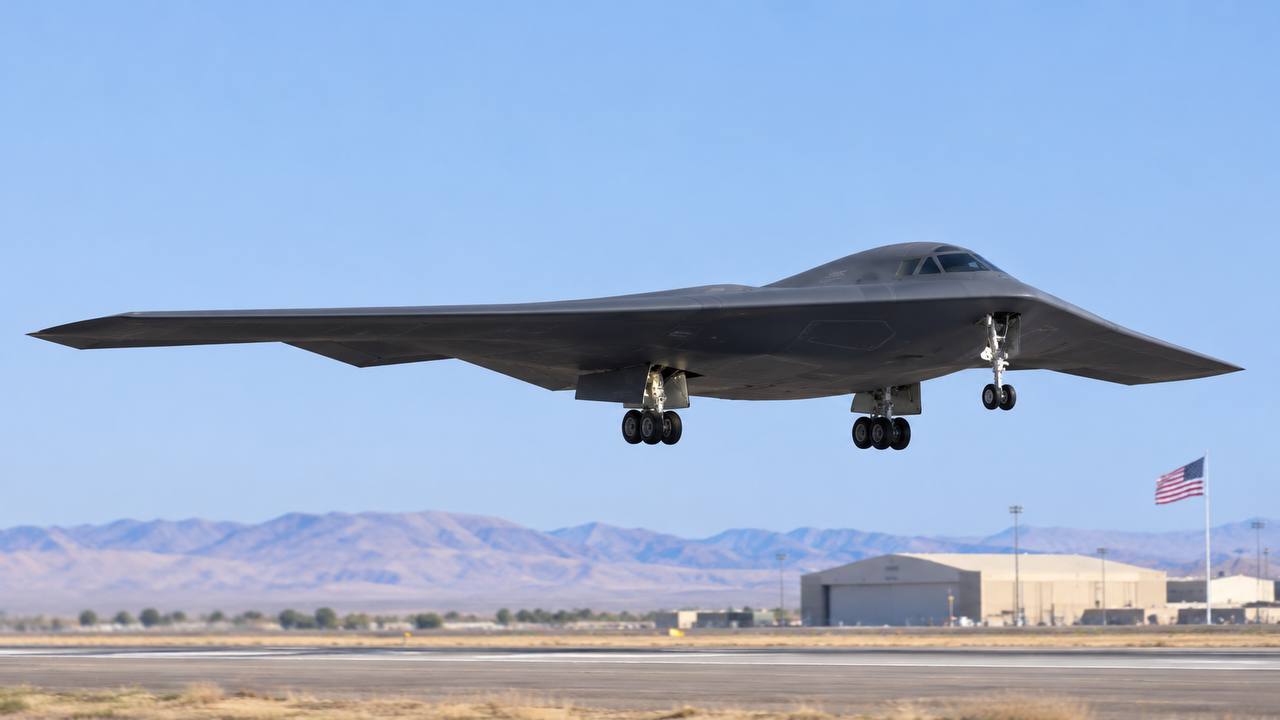

The United States Department of the Air Force stated that it carried out a weapons release test for the B-21 Raider stealth bomber. The aircraft flew from Edwards Air Force Base in California and successfully released a conventional weapon during the test flight. Air Force officials noted that the evaluation demonstrated the functional capability of the aircraft as a weapons platform and proved that digital models and open systems architecture operated as expected. The development contract for the aircraft was awarded to Northrop Grumman in the past, and industry partners on the program include Pratt and Whitney, Janicki Industries, Collins Aerospace, GKN Aerospace, BAE Systems, and Spirit AeroSystems.
Air Force Secretary Troy Meink stated that the B-21 is designed to provide improved combat capability while combining reliability and maintainability. Meink added that the successful test demonstrates the ability to adapt rapidly and hold targets at risk if deterrence fails. Air Force Chief of Staff Ken Wilsbach stated that the test proves the program is excelling. The Air Force indicated that the program remains ahead of schedule, with the first operational aircraft scheduled to arrive at Ellsworth Air Force Base in South Dakota.
Background: Strategic bomber aircraft have formed a central component of long-range military aviation power for decades. The development of stealth technology transformed military aviation by reducing radar signatures to penetrate heavily defended airspace. Successive generations of strategic bombers have integrated advanced avionics, digital engineering, and precision-guided munitions to enhance operational flexibility. Defense procurement programs typically involve extensive flight testing phases before operational deployment to validate structural integrity, software integration, and weapon compatibility.
The integration of weapons testing marks a key transitional phase in moving the aircraft from development into active service capabilities.
Source: Al Arabiya