




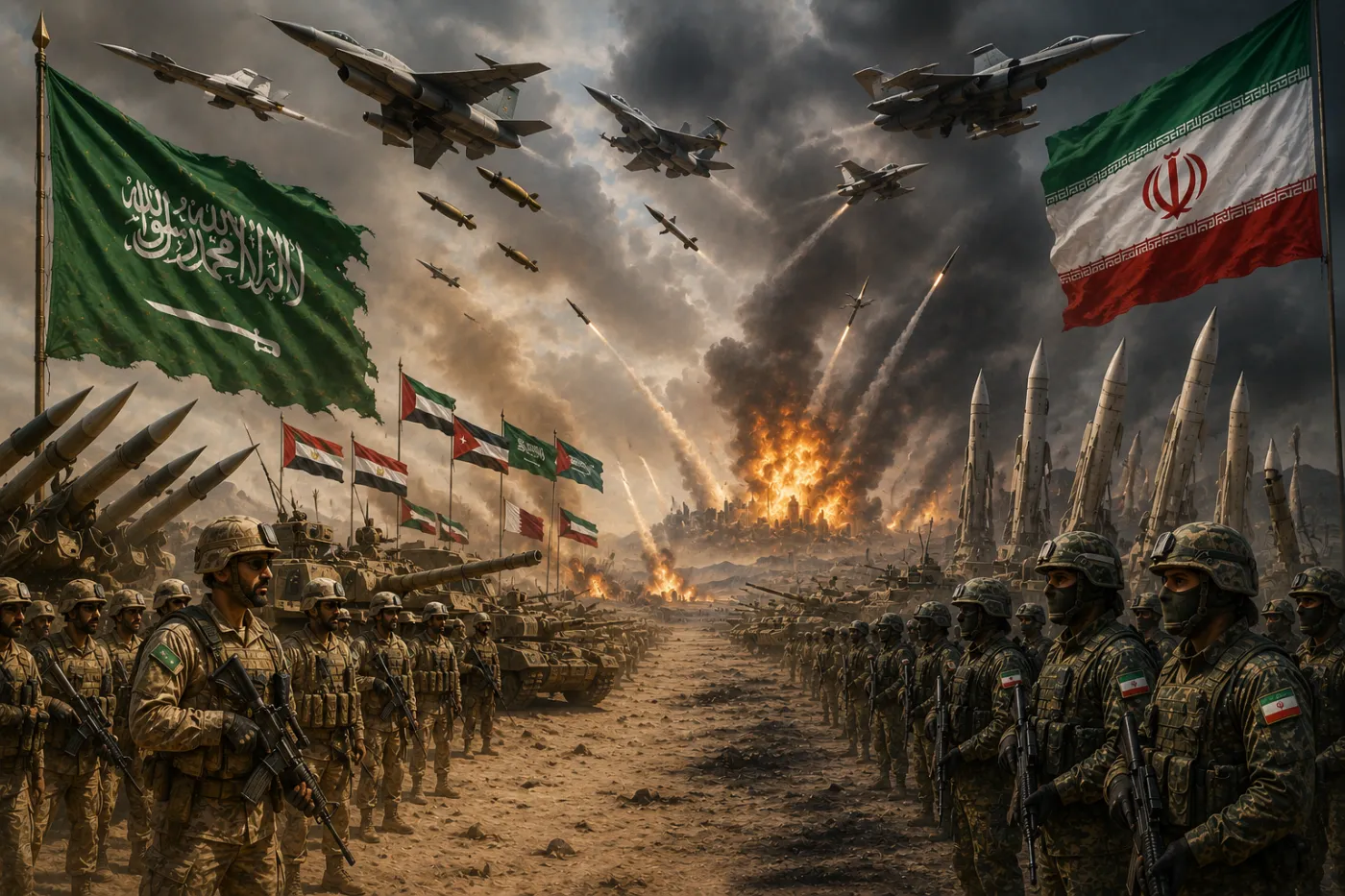

In every new round of tension in the Gulf, an old question returns: Why have Arab states, despite their immense wealth, advanced Western weapons and close security ties with the United States, been unable to form a decisive front against the Islamic Republic of Iran? Why can’t they, as some nationalist rhetoric suggests, “repeat the Battle of al-Qadisiyyah”, the seventh-century Arab victory over the Sasanian Empire?
The answer is uncomfortable but clear: because Iran has spent more than four decades building a military-security state designed for survival, retaliation and asymmetric warfare. In contrast, many Arab states have outsourced their security to foreign powers.
That difference lies at the heart of the problem.
After the 1979 revolution, the Iran-Iraq War, arms embargoes and decades of sanctions, Tehran learnt a hard lesson: it could not compete with its wealthy Arab neighbours in buying modern fighter jets, air-defence systems or Western military technology. Iran’s air force is ageing. Its access to spare parts narrowed. Its conventional military capabilities remained limited compared with the arsenals of Saudi Arabia, the UAE, Qatar and other Gulf monarchies.
But Iran turned that weakness into a doctrine. If it could not win a classic war, it would make war non-classic.
Instead of building a military modelled on Gulf Arab armies equipped with F-15s, F-16s, F-35s, Patriots and THAAD systems, Tehran invested in ballistic missiles, drones, naval harassment, cyber capabilities, internal security structures, the Quds Force and a regional network of proxies. Iran failed to build a modern air force, but it built something else: an arsenal capable of threatening airports, ports, oil facilities, desalination plants, U.S. bases and shipping routes.
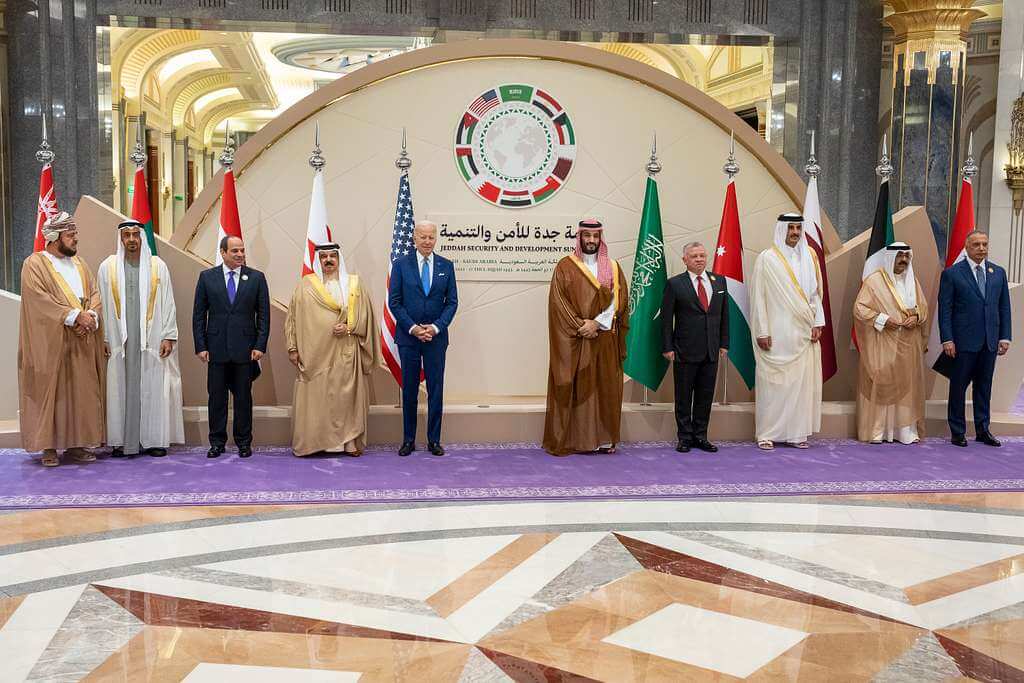
Arab states, by contrast, built a different security model: security through purchase. They bought advanced aircraft, radars, air defences, and command systems. They hosted U.S. bases. They relied on American protection as the backbone of deterrence. On paper, the model looked formidable. Gulf skies were filled with Western technology, and Arab military spending often dwarfed Iran’s.
But buying military power is not the same as producing strategic power.
Strategic power requires more than equipment. It requires independent operational capacity, political will, unified command, a domestic doctrine, tolerance for losses and readiness for prolonged conflict. Iran, despite its economic weakness and technological limits, took this darker side of power seriously. Many Arab states assumed that if a major crisis came, the United States would intervene, Western air defences would work, and the enemy would back down.
Iran has built its strategy precisely around challenging that assumption.
Tehran knows that striking Riyadh, Abu Dhabi, or Manama is not merely a strike against Arab capitals; it is also a test of American credibility. It knows that U.S. bases in the Gulf are both shields and targets. It knows that Gulf economies depend on stability, investment, tourism, energy exports, and a security image. So Iran does not need to win a war in the traditional sense. It only needs to make war unbearably expensive for the other side.
This is the asymmetry: Arab states bought weapons to secure themselves; Iran built a doctrine to make others insecure.
In international relations terms, the Gulf monarchies have relied on what might be called outsourced security. After Iraq invaded Kuwait in 1990, this logic became even stronger. Small, wealthy states with limited populations, shallow strategic depth and highly concentrated infrastructure concluded that their survival depended on U.S. protection. That calculation was understandable. But it also turned them into permanent consumers of external security.
Iran followed the opposite path. Isolated by sanctions and denied access to many advanced weapons systems, it pursued forced self-reliance. That self-reliance did not make Iran a superpower. The Islamic Republic remains vulnerable: economically strained, internally unpopular, technologically limited and conventionally weaker than many of its neighbours. But in the field that matters most for regional deterrence, asymmetric punishment, Tehran has invested consistently and obsessively.
This is why comparing military budgets alone is misleading. Saudi Arabia may spend several times more than Iran on defence. The UAE may possess more advanced aircraft. Qatar may host the largest U.S. military facility in the region. But Iran can use relatively cheap drones and missiles to impose enormous defensive costs on its rivals. A multimillion-dollar interceptor may be used to shoot down a far cheaper drone. A limited strike on an oil facility may shake global markets. A militia attack from Iraq, Yemen or Lebanon may create deniability while still delivering pressure.
The Arab world also lacks a real unified front. Saudi Arabia, Bahrain and the UAE often view Iran as a direct threat. Oman and Qatar prefer mediation and open channels. Kuwait remains cautious. Iraq is itself a zone of Iranian influence. Egypt and Jordan have their own economic and domestic priorities. What is often called “the Arab world” is not a strategic bloc; it is a fragmented collection of states with different fears, interests and vulnerabilities.
Iran has become skilled at exploiting those divisions. With Oman, it uses diplomacy. With Qatar, it uses balancing and economic ties. In Iraq, it uses political, religious and militia networks. In Yemen, the Houthis. In Lebanon, Hezbollah. In Syria, military and intelligence networks. Tehran does not possess a single regional army, but it does possess a network. Arab states possess money and modern weapons, but they often lack an equivalent network for indirect pressure.
That is why the Battle of al-Qadisiyyah cannot be repeated. Qadisiyyah was a classic battle between two historical orders. Today’s confrontation with Iran is not a single battle. It is a confrontation with a state network: a regime that can operate across borders through proxies, missiles, drones, cyber tools, maritime pressure and ideological influence. Iran does not fight only from Iranian territory. If pressured, its response may come from Iraq, Lebanon, Yemen, Syria, the Gulf, cyberspace or the global energy market.
Arab leaders understand this. They may be angry at Tehran, but they rarely want open war with it. They want Iran contained, not a regional inferno. They want American pressure, but not necessarily the full costs of conflict. They want Iran weakened, but they fear uncontrolled escalation, attacks on energy infrastructure, domestic instability and damage to their development projects.
This is especially true for Saudi Arabia and the UAE. Their modern political projects depend on stability. Saudi Vision 2030, Dubai’s financial model, Abu Dhabi’s investment strategy, Qatar’s gas exports and the Gulf’s tourism ambitions all require a perception of safety. Investors do not flock to a region that appears permanently on the edge of missile war. For Iran, therefore, the threat is often enough. It does not need to occupy; it needs to unsettle.
This is where historical slogans such as Qadisiyyah collapse. In political memory, the Battle of al-Qadisiyyah may symbolise Arab victory over Persia. But in the modern world, neither Iran is the Sasanian Empire nor are the Arabs the unified forces of the early caliphate. In the seventh century, an exhausted empire could collapse after decisive battlefield defeats. In the twenty-first century, an ideological security regime with missiles, drones, proxies, internal repression and regional networks can continue to impose costs even after military setbacks.
None of this means the Islamic Republic is invincible. It is not. It suffers from deep internal crises: a legitimacy deficit, economic decay, corruption, generational anger, social resistance and institutional incompetence. But domestic weakness does not automatically translate into immediate external vulnerability. Some regimes that are weak at home become especially dangerous abroad because they see a crisis as a tool of survival.
That is why the real question is not simply why Arab states cannot defeat Iran. The sharper question is this: Why would states that have built their security on foreign protection and imported weapons enter a war against a regime that has spent four decades preparing for asymmetric survival, retaliation and regional disruption?
That is the reason Qadisiyyah cannot be repeated. Modern war is not a battlefield of historical glory; it is a calculation of costs. Iran may not be able to defeat the Arab world, but it has made the cost of victory frighteningly high. That is the essence of Tehran’s deterrence: not overwhelming strength, but enough destructive capacity to make its enemies hesitate.
Qadisiyyah, therefore, remains a metaphor, not a military option. Arab states have expensive armies; Iran has cheap, patient and disruptive warfare. Arab states have modern skies; Iran plays through land, sea, proxies and time. Arab states outsourced security; the Islamic Republic manufactured insecurity and exported it.
As long as that asymmetry remains, history will not repeat itself.